Chapter 09 · 1978–2025
Factory, Market, Rival
“Factory,” “market,” and “rival” were not successive discoveries of what China really was. They were overlapping institutional frames produced by a changing relationship: satellite comparison made reform visible as transformed land, trade law made integration durable, development expertise made growth governable, and export controls remade interdependence as a security risk.
After 1978, reform and expanding exchange reorganised how China appeared in Western institutions. The People’s Republic could be imagined at once as a vast consumer market, the production base of global supply chains, a spectacular development case, and a competitor in technologies treated as strategic. This chapter follows a deliberately limited archive—principally United States government and multilateral records. It does not substitute those views for the histories of workers, migrants, entrepreneurs, officials, communities, and environments that made and bore the costs of China’s transformation.
Evidence set6 objects · 1979–2025
Method noteThe sequence moves through four institutional acts: comparison, legislation, prescription, and restriction. Each turns the same relationship into a different object of knowledge. The categories overlap: the market depends on the factory, the development model depends on Chinese agency, and the rival remains an indispensable negotiating partner.
The evidence sequence
How interdependence changed the frame
Scroll through 4 surviving objects. The image changes as the argument advances from one frame to the next.

01 / Reform
A satellite image becomes a “before” picture
NASA’s Landsat 3 observed the Pearl River Delta on 19 October 1979, one year before Shenzhen was designated a Special Economic Zone. Published beside a 2003 image in 2007, the earlier view acquired a new archival role. It became the baseline against which market reform could be pictured as physical transformation.
Close readingRed vegetation dominates the delta; blue-green channels divide fields and wetlands; only scattered grey marks interrupt the surface. Dark scan lines expose the image as instrument data rather than a transparent view. Its apparent emptiness is retrospective: the later city makes this earlier inhabited landscape look like space awaiting development.
Open source record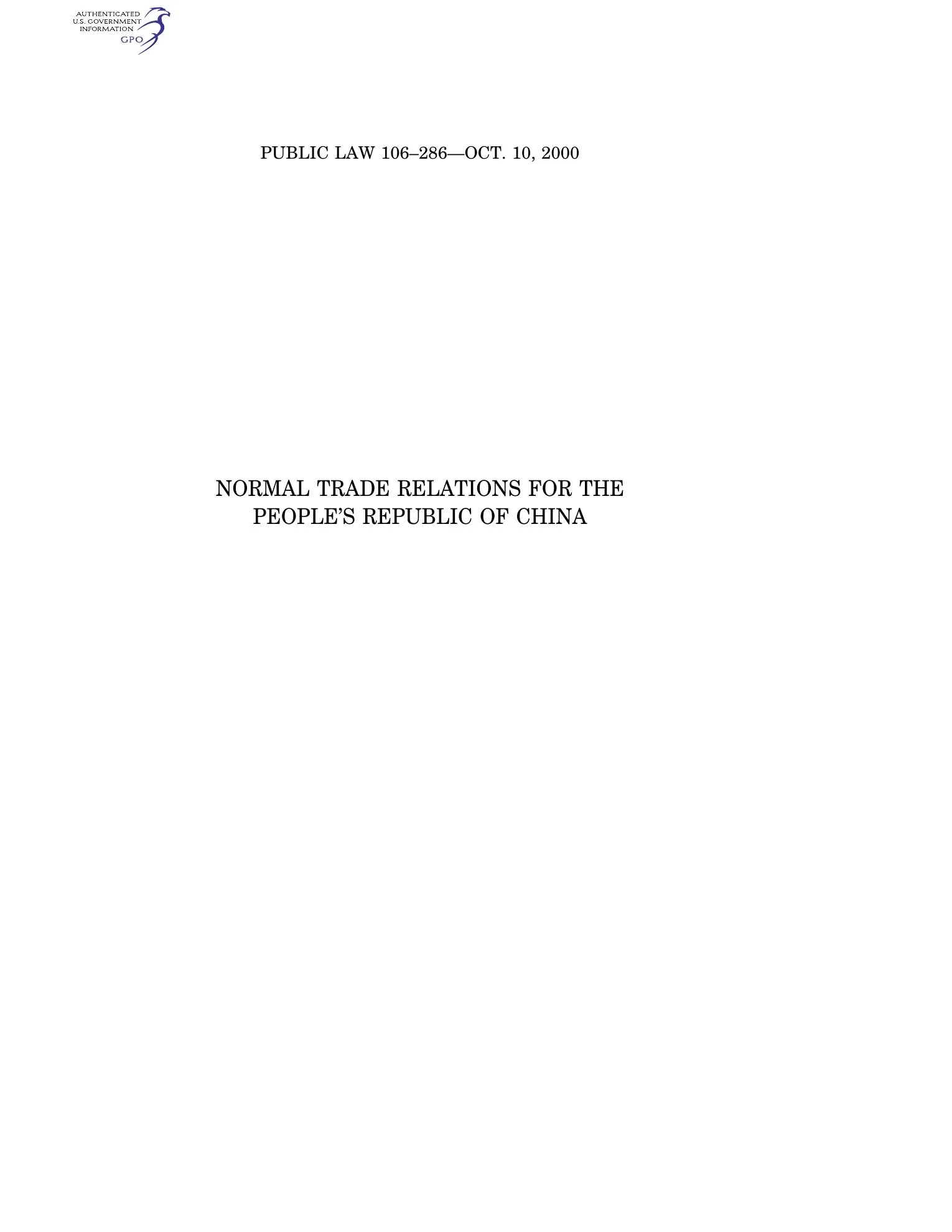
02 / Market
The market enters the law
Public Law 106-286 authorised permanent normal trade relations for the People’s Republic of China and established a new framework for the relationship. The statute helped clear the American legal path for China’s accession to the World Trade Organization in 2001, turning an annual political decision into durable trade infrastructure.
Close readingThe opening page is almost empty. A small authentication mark, a date, and an all-capital title compress a contested relationship into the administrative language of “normal trade.” The visual calm conceals the scale of the wager—that commercial integration could be regularised even while political differences remained.
Open source record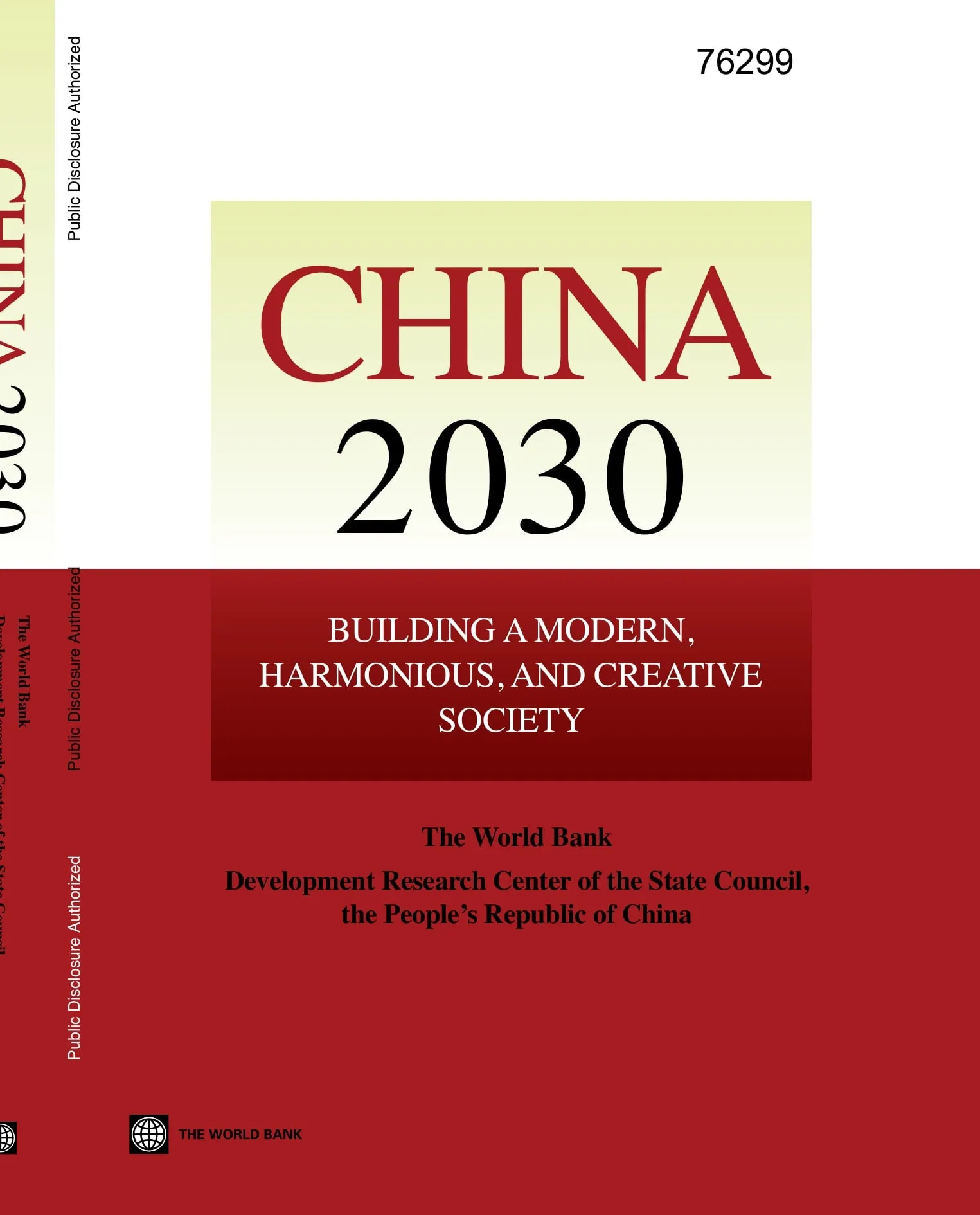
03 / Model
The factory becomes a development model
China 2030 described the country as the world’s largest manufacturer and exporter and projected a path toward high-income status. Yet it was not simply an external diagnosis. The World Bank produced the report jointly with the Development Research Center of China’s State Council, making development expertise itself part of the relationship.
Close readingA monumental red title and the date 2030 dominate the cream-and-red cover. “Modern,” “harmonious,” and “creative” sit beneath them as measurable destinations. The two institutional names at the bottom complicate the direction of the gaze: this image of a reformable China was negotiated and co-authored, not merely imposed from outside.
Open source record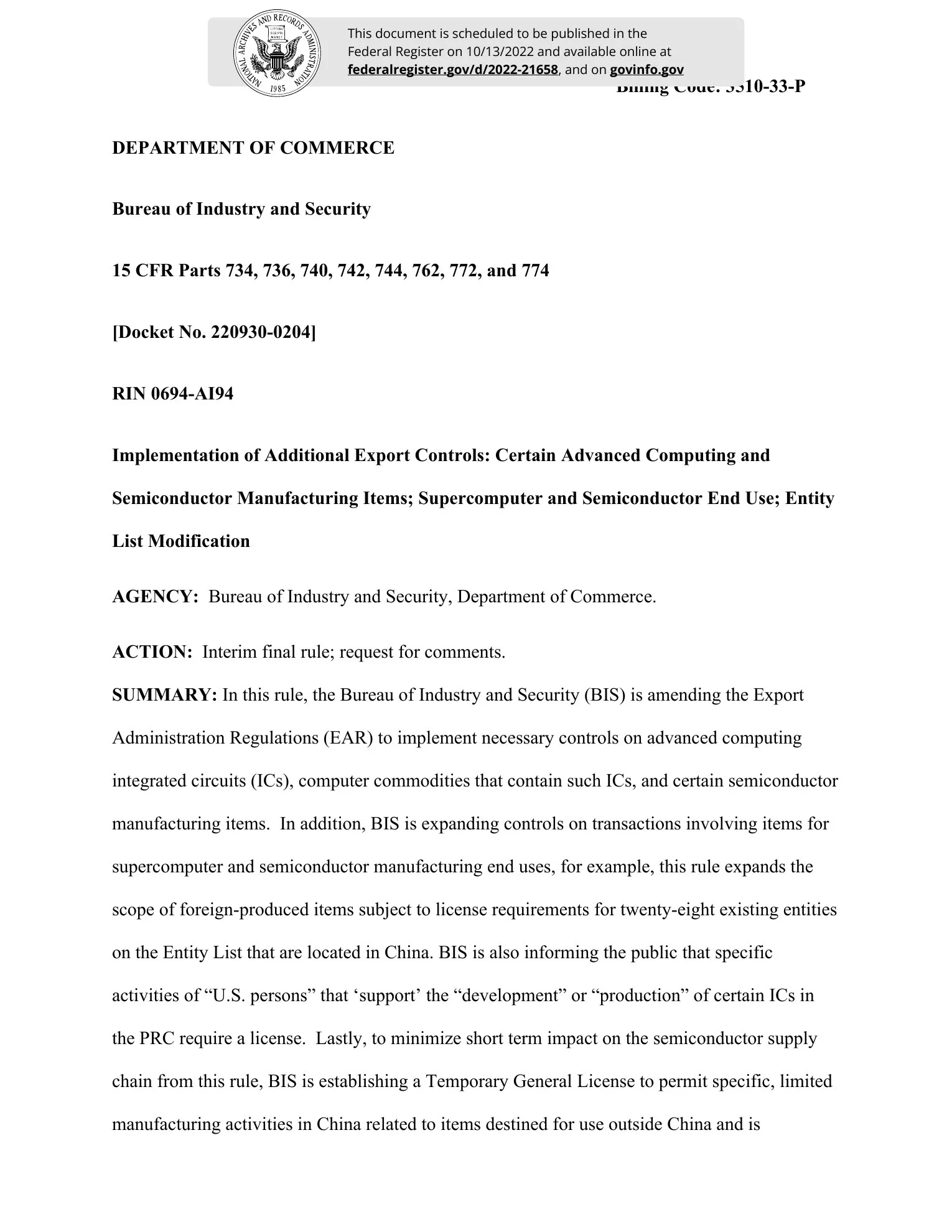
04 / Rival
The supply chain becomes a security perimeter
In October 2022, the United States Bureau of Industry and Security restricted advanced computing chips, semiconductor manufacturing equipment, supercomputer end uses, and some supporting activities by United States persons in China. Components once celebrated as links in an efficient global market were reorganised as strategic chokepoints.
Close readingAgency seals, billing codes, regulatory citations, and a title stretching across three lines convert highly specialised technologies into a national-security boundary. The summary also creates a temporary licence to limit disruption outside China. Even the document of restriction acknowledges the supply chain it cannot instantly divide.
Open source recordCounter-reading
Factory, market, and rival coexist
These labels organise decisions made by governments and international institutions; they do not total China’s post-1978 history. Read together, the sources reveal both the power and the limits of describing a country through the functions it serves in someone else’s policy.
- 01“World factory” can make concrete, water, ports, and output visible while pushing labour regimes, migration, environmental damage, and Chinese industrial policy out of frame. The 1979 and 2003 Landsat images record transformation but cannot explain who directed it or who paid its costs.
- 02Integration was not a one-way act in which Western institutions admitted a passive China. Chinese governments and firms bargained over rules, redirected capital and knowledge, and reshaped production networks. The joint authorship of China 2030 makes that co-production unusually explicit.
- 03The rival frame does not end interdependence; it reorganises it around controls, exceptions, trusted suppliers, and negotiation. The 2025 bilateral meeting stages competition and continued contact at the same table, beneath alternating national flags.
Evidence register
Sources in this chapter
- 01Pearl River Delta, 19 October 1979Jesse Allen, using Landsat 3 MSS data provided by the University of Maryland Global Land Cover Facility19 October 1979Reform is given a visual baseline
- 02Public Law 106-286: Normal Trade Relations for the People’s Republic of ChinaUnited States Congress10 October 2000Trade integration becomes permanent legal infrastructure
- 03China 2030: Building a Modern, Harmonious, and Creative SocietyWorld Bank and Development Research Center of the State Council, People’s Republic of China2013Manufacturing success becomes a reformable development model
- 04Implementation of Additional Export Controls on Advanced Computing and Semiconductor Manufacturing ItemsBureau of Industry and Security, United States Department of Commerce7 October 2022Interdependence becomes a national-security vulnerability
- 05Urbanization of the Pearl River Delta, 10 January 2003Jesse Allen, using Landsat 7 ETM+ data provided by the Landsat Project Science Office at NASA Goddard Space Flight Center10 January 2003The factory becomes visible as built surface
- 06President Donald Trump participates in a bilateral meeting with President Xi JinpingDaniel Torok, White House photographer30 October 2025Strategic rivalry remains a negotiated relationship